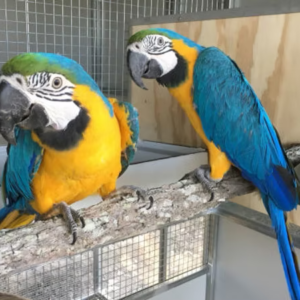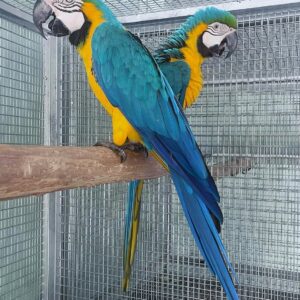


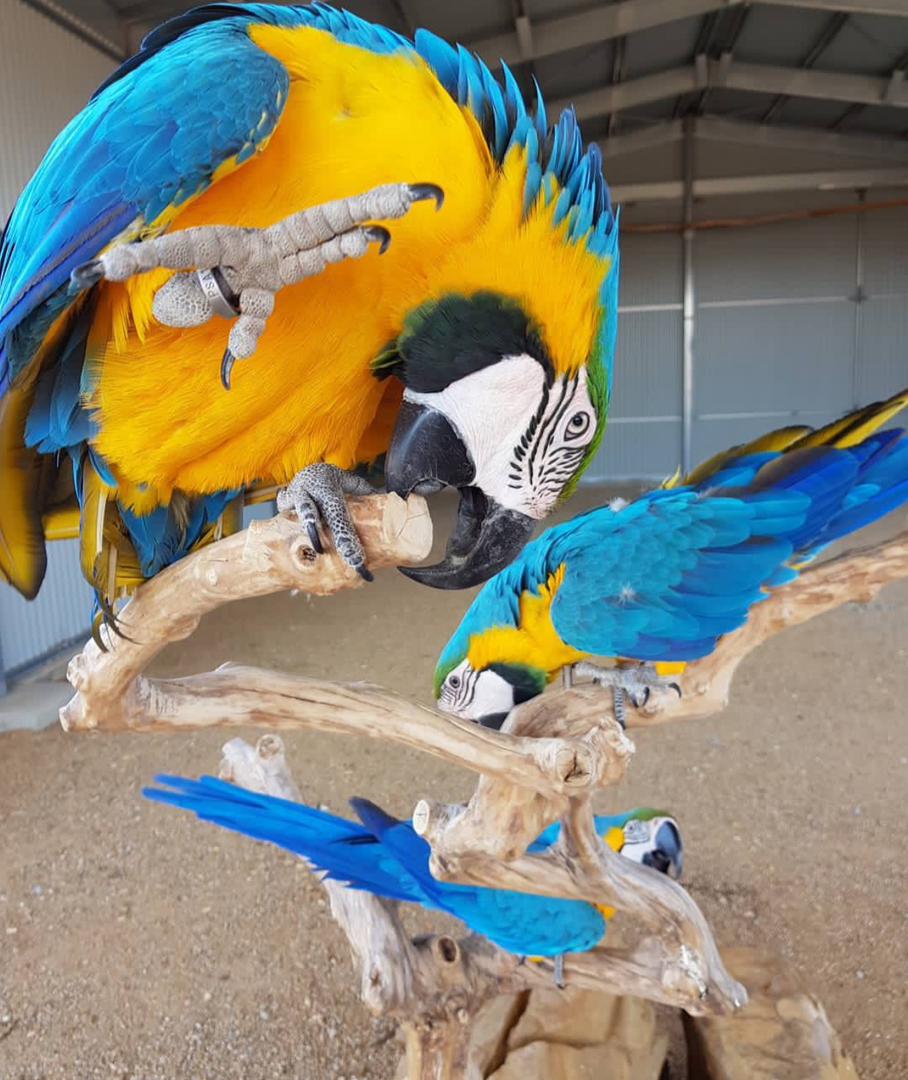
Young Pair Blue and Gold Macaw for Sale – Healthy, Social & Hand-Raised Meet Jack & Jill
$1,700.00
Young Pair Blue and Gold Macaw — Male & Female, Available Now
$1,700
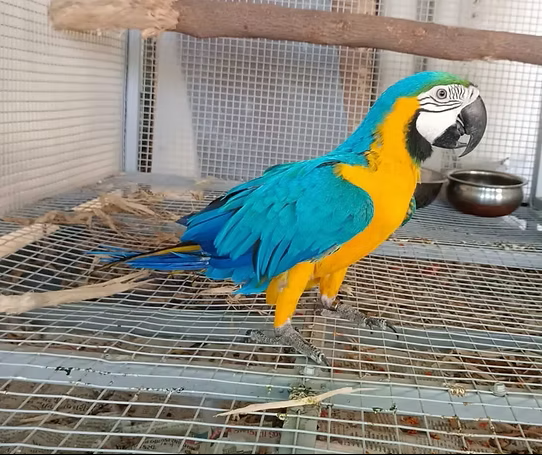
This handsome Blue and Gold Macaw is ready for his forever home!
- Age: 10-13 months old
- Name: Jack & Jill
- Sex: Male & Female
- Breed: Purebred
- Registration: Registered
- Training: Cage trained
- Guarantees: 1-year health guarantee | 30-day money-back guarantee
Friendly, well-socialized, and ready to bond with his new family. Serious inquiries only add to cart and place your order— contact for more details or to arrange a visit.
Description
Young Pair Blue and Gold Macaw for Sale – Healthy, Social & Well-Socialized
Looking for a Blue and Gold Macaw for sale from a source that can provide useful information about the bird, its care, personality, and long-term needs?
The Blue and Gold Macaw, also commonly called the Blue and Yellow Macaw, is one of the world’s most recognisable companion parrots. Its scientific name is Ara ararauna, and the species is admired for its brilliant blue-and-yellow plumage, remarkable intelligence, playful personality, strong social nature, and impressive size.
At Parrots For Sales, we understand that buying a macaw is a major decision. A Blue and Gold Macaw is not simply a beautiful bird—it is a highly intelligent, vocal, energetic, and long-lived companion that requires daily interaction, appropriate nutrition, a spacious environment, enrichment, exercise, and qualified avian veterinary care.
If you’re searching for a Blue and Gold Macaw for sale, Blue and Yellow Macaw for sale, Blue and Gold Macaw price, or wondering where to buy a Blue and Gold Macaw, this guide will help you understand what to consider before bringing one home.
Blue and Gold Macaw for Sale
The Blue and Gold Macaw (Ara ararauna) is a large New World parrot native to parts of Central and South America. It has become a popular companion bird because of its striking appearance, intelligence, curiosity, and highly interactive personality.
A properly socialised Blue and Gold Macaw may enjoy spending time with people, exploring its surroundings, learning behaviours, playing with toys, and participating in everyday family activities. Young Pair Blue and Gold Macaw for Sale – Healthy, Social & Hand-Raised Meet Jack & Jill
Many Blue and Gold Macaws can learn words, sounds, tricks, and basic behaviours through patient, consistent, reward-based training. However, every bird is an individual. Socialisation and hand-rearing can contribute to positive experiences with people, but they do not guarantee a particular personality or temperament.
Before purchasing a Blue and Gold Macaw, prospective owners should understand the commitment involved. These are large, intelligent, vocal, active parrots that can live for several decades with appropriate care.
A suitable home should provide:
- Plenty of safe living space
- Daily interaction and companionship
- Mental stimulation and enrichment
- Regular exercise
- A nutritious, species-appropriate diet
- Safe toys and perches
- Appropriate training
- Regular health monitoring
- Access to an experienced avian veterinarian
Why Choose a Blue and Gold Macaw?
There is a reason Blue and Gold Macaws are so popular among experienced parrot keepers.
Their most recognisable qualities include:
- Brilliant blue and golden-yellow plumage
- High intelligence and curiosity
- Playful and energetic personalities
- Strong social bonds
- Ability to imitate sounds and potentially learn words
- Enjoyment of toys, puzzles, and foraging activities
- Highly expressive personalities
- Potential to develop strong relationships with their caregivers
For the right owner, sharing a home with a Blue and Gold Macaw can be an incredibly rewarding experience.
However, these parrots are not low-maintenance pets. Their size, intelligence, vocal nature, social requirements, and longevity mean that ownership requires considerably more preparation than owning many smaller companion birds.
Before buying a macaw, consider your home, daily schedule, finances, housing situation, travel plans, family circumstances, and ability to provide long-term care.
Blue and Gold Macaw Appearance, Size & Characteristics
The Blue and Gold Macaw is instantly recognisable.
Its upper body and wings are predominantly vivid blue, while the chest and underside display rich golden-yellow colouration. The face has characteristic white skin with dark feather lines, complemented by a large, powerful curved beak and an exceptionally long tail.
An adult Blue and Gold Macaw commonly reaches approximately 30 to 36 inches in total length, including its tail. Its wingspan can approach approximately 40 inches, although individual birds vary.
Because of their size and activity level, these parrots need substantially more space than smaller companion birds.
A secure, appropriately sized cage or aviary, combined with safe and supervised time outside the enclosure, can help provide the exercise and environmental stimulation a macaw needs.
What Makes the Blue and Gold Macaw Special?
Beautiful Blue-and-Yellow Plumage
The striking contrast between deep blue feathers and golden-yellow underparts is one of the defining features of the species.
But appearance is only part of the attraction.
Blue and Gold Macaws are also known for their intelligence, curiosity, vocal communication, playful behaviour, and interactive nature.
Intelligent and Eager to Learn
Blue and Gold Macaws are intelligent parrots that need regular mental stimulation.
Useful enrichment can include:
- Puzzle toys
- Foraging activities
- Positive-reinforcement training
- Interactive games
- Safe objects to investigate
- Learning sounds and behaviours
- Supervised exploration
- Regular social interaction
Many individuals can learn words, sounds, tricks, and simple behaviours. Training works best when it is based on patience, consistency, rewards, and clear communication rather than punishment.
Because these birds are highly intelligent, boredom and insufficient enrichment may contribute to undesirable behaviours.
Providing opportunities to explore, forage, chew, play, and learn can make a significant difference in a macaw’s daily life.
Social, Interactive and Engaging
Blue and Gold Macaws are naturally social birds.
A well-socialised individual may enjoy interacting with its caregivers and being part of household activities. At the same time, a healthy routine should include opportunities for independent play, rest, sleep, foraging, and exploration.
Socialisation does not mean a macaw needs to be handled every minute of the day.
The goal is to create a balanced environment where the bird can interact with people while also developing confidence and independence.
A Long-Term Commitment
One of the most important things to understand before buying a macaw is its potential lifespan.
With appropriate nutrition, veterinary care, exercise, enrichment, and safe housing, Blue and Gold Macaws can live for several decades.
That makes purchasing one a serious long-term commitment.
Think beyond the first year. Consider future housing, finances, travel, family changes, work schedules, and who would care for the bird if your circumstances change.
Blue and Gold Macaw Health & Care
When choosing a companion parrot, appearance should never be the only consideration.
Responsible ownership begins with understanding the bird’s health history, current diet, housing, behaviour, socialisation, and ongoing care requirements.
Important areas of Blue and Gold Macaw care include:
- Balanced nutrition
- Clean drinking water
- Safe and spacious housing
- Appropriate perches
- Daily exercise
- Social interaction
- Mental stimulation
- Safe toys and enrichment
- Regular health monitoring
- Access to qualified avian veterinary care
Before purchasing a Blue and Gold Macaw, ask the seller for relevant information and documentation where available.
Depending on the bird and applicable requirements, this may include:
- Age
- Current diet
- Health history
- Veterinary records
- Identification information
- Ownership documentation
- Previous care information
- Socialization history
It is also wise to establish a relationship with an avian veterinarian experienced in caring for parrots.
Blue and Gold Macaw Price – How Much Does a Blue and Gold Macaw Cost?
How much does a Blue and Gold Macaw cost?
There is no single price that applies to every Blue and Gold Macaw. The cost can vary according to factors such as:
- Age
- Health history
- Availability
- Location
- Socialization
- Hand-rearing history
- Documentation
- Individual characteristics
- Seller
- Transportation requirements
When researching the price of a Blue and Gold Macaw, remember that the purchase price is only one part of responsible ownership.
Additional expenses may include:
- Large cage or aviary
- Quality formulated parrot food
- Fresh fruits and vegetables
- Toys and enrichment
- Perches
- Cleaning supplies
- Routine veterinary examinations
- Emergency veterinary treatment
- Transportation
- Other bird-care equipment
Blue and Gold Macaw Price at Parrots For Sales
The currently listed price for our Blue and Gold Macaw is $850.
Because availability, age, health information, and individual bird characteristics can change, prospective buyers should contact Parrots For Sales to confirm the current price and availability before making payment or arranging transportation.
When comparing Blue and Gold Macaws from different sellers, don’t automatically choose the cheapest option.
Consider the complete picture: health information, care history, socialisation, documentation, living conditions, seller transparency, transportation, and the long-term cost of caring for a large parrot.
What Do Blue and Gold Macaws Eat?
Good nutrition is an essential part of maintaining a healthy Blue and Gold Macaw.
A suitable diet generally includes a quality formulated parrot food as a nutritional foundation, supplemented with appropriate fresh foods.
Depending on the individual bird’s needs, suitable fresh foods may include:
- Apples and other bird-safe fruits
- Bananas
- Berries
- Carrots
- Broccoli
- Leafy green vegetables
- Other suitable vegetables
- Appropriate nuts in moderation
Fresh, clean drinking water should always be available.
Dietary requirements can vary depending on age, activity level, health status, and the bird’s existing diet.
If you are bringing a Blue and Gold Macaw into a new home, ask what the bird is currently eating and discuss major dietary changes with an avian veterinarian.
Foods That Can Be Dangerous to Parrots
Some foods that are safe for people can be dangerous or toxic to parrots.
Avoid intentionally feeding parrots foods such as:
- Avocado
- Chocolate
- Alcohol
- Caffeinated foods and beverages
Foods that are excessively salty, heavily seasoned, or otherwise unsuitable for parrots should also be avoided.
If you are unsure whether a particular food is safe for your macaw, consult an appropriately qualified avian veterinarian.
Is a Blue and Gold Macaw a Good Pet?
A Blue and Gold Macaw can be an exceptional companion for the right owner, but it is not the right pet for every household.
These parrots are:
- Large
- Intelligent
- Energetic
- Vocal
- Social
- Curious
- Long-lived
Compared with many smaller companion birds, they require more space, attention, enrichment, exercise, and long-term financial commitment.
Their powerful beaks also mean that responsible handling, boundaries, and positive-reinforcement training are important.
Before buying a Blue and Gold Macaw, make sure you can provide:
- A spacious and secure environment
- Daily social interaction
- Safe exercise opportunities
- Mental stimulation
- Appropriate toys and enrichment
- A nutritious diet
- Access to avian veterinary care
- Patient, positive-reinforcement training
- Long-term financial support
- A stable environment
If you are prepared for these responsibilities, a well-socialised Blue and Gold Macaw can become an intelligent, engaging, and rewarding companion.
Where Can I Buy a Blue and Gold Macaw?
If you searched for “Blue and Gold Macaw for sale near me,” “Blue and Yellow Macaw for sale,” or “where can I buy a Blue and Gold Macaw?”, take time to research the seller before making a decision.
Buying a large parrot should involve much more than finding the lowest advertised price.
Before purchasing, ask the seller these important questions.
1. How Old Is the Macaw?
Ask for the bird’s exact or estimated age and request supporting documentation where available.
Age can be important when understanding a bird’s history, care requirements, and long-term expectations.
2. What Is the Bird’s Health History?
Ask about the bird’s current health, previous veterinary examinations, known medical concerns, and available health records.
A responsible buyer should understand the bird’s health situation before completing a purchase.
3. What Does the Macaw Eat?
Ask what food the bird currently receives.
Maintaining a familiar diet during the initial transition can help reduce unnecessary changes while the bird adjusts to its new environment. Dietary changes can then be introduced gradually when appropriate.
4. What Is the Bird’s Temperament Like?
Ask how the macaw behaves around:
- People
- New environments
- Handling
- Other birds
- Household activity
- New objects
Remember that temperament differs between individual birds.
5. Has the Macaw Been Socialised?
Ask about the bird’s experience with people and whether it has regularly experienced positive human interaction.
Good socialisation can help a bird become more comfortable around people, although it does not guarantee a specific personality.
6. What Are the Living Conditions?
Ask how the macaw has been housed and what types of:
- Perches
- Toys
- Exercise
- Enrichment
- Social interaction
it receives.
Good care history can provide useful insight into the bird’s overall routine.
7. Is Documentation Available?
Depending on the circumstances and applicable laws, ask about health records, identification, ownership documentation, and other relevant paperwork.
8. How Will the Bird Be Transported?
If the macaw needs to travel, confirm transportation arrangements, timing, responsibilities, and costs before completing the transaction.
A trustworthy seller should be willing to answer reasonable questions and provide sufficient information for a prospective owner to make an informed decision.
Blue and Gold Macaw for Sale from Exotic Parrots Aviary
If you’re interested in our Blue and Gold Macaw for sale, Parrots For Sales can provide information on current availability and the responsibilities of owning a large companion parrot.
Before purchasing, contact us to confirm:
- Current availability
- Age
- Health information
- Temperament
- Socialization history
- Current diet
- Current price
- Care requirements
- Pickup options
- Transportation arrangements
We believe prospective owners should have an opportunity to ask questions and understand what is involved before making a purchasing decision.
A Blue and Gold Macaw is much more than a beautiful bird. It can become a long-term companion and an important part of a household, but only when its physical, behavioural, social, and nutritional needs are properly understood.
Frequently Asked Questions About Blue and Gold Macaws
How much does a Blue and Gold Macaw cost?
The price of a Blue and Gold Macaw varies depending on factors such as age, health, availability, socialisation, location, documentation, and seller. The currently listed price from Parrots For Sale is $900. Contact us to confirm the current price and availability.
How big does a Blue and Gold Macaw get?
An adult Blue and Gold Macaw can reach approximately 30–36 inches in total length, including its long tail. Its wingspan can approach approximately 40 inches, although individual birds vary.
Are Blue and Gold Macaws good pets?
They can be excellent companions for prepared owners who understand their needs. They are large, intelligent, vocal, energetic, and social parrots that require substantial daily care, interaction, exercise, enrichment, and long-term commitment.
Are Blue and Gold Macaws affectionate?
Many well-socialized Blue and Gold Macaws enjoy interacting with their caregivers and can develop strong relationships with people. However, temperament varies between individual birds.
Can Blue and Gold Macaws talk?
Blue and Gold Macaws can imitate words, sounds, and other noises. Talking ability varies from bird to bird and should never be considered guaranteed.
What do Blue and Gold Macaws eat?
A balanced diet generally includes an appropriately formulated parrot food supplemented with suitable fresh fruits and vegetables. An avian veterinarian can provide recommendations based on an individual bird’s nutritional needs.
How long do Blue and Gold Macaws live?
Blue and Gold Macaws can live for several decades when provided with appropriate nutrition, veterinary care, exercise, enrichment, and safe housing.
What is another name for a Blue and Gold Macaw?
The Blue and Gold Macaw is also commonly known as the Blue and Yellow Macaw. Its scientific name is Ara ararauna.
Where can I find a Blue and Gold Macaw for sale near me?
Availability depends on location and current listings. Before purchasing, research the seller carefully and ask about the bird’s age, health history, diet, socialisation, documentation, living conditions, and transportation arrangements.
Ready to Learn More About Our Blue and Gold Macaw?
Interested in a Blue and Gold Macaw for sale?
Contact Exotic Parrots Aviary to learn more about current availability, pricing, health information, temperament, socialization, care requirements, and pickup or transportation options.
Remember that purchasing a macaw is a long-term commitment. Take time to ask questions and make sure your home, schedule, finances, and lifestyle are suitable for caring for a large, intelligent parrot.
Contact Exotic Parrots Aviary today to learn more about our available Blue and Gold Macaw.