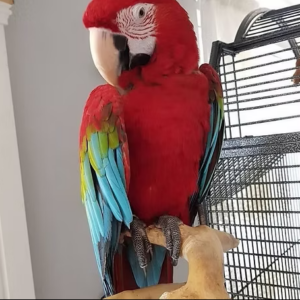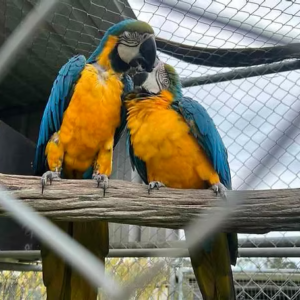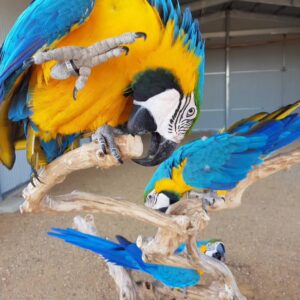

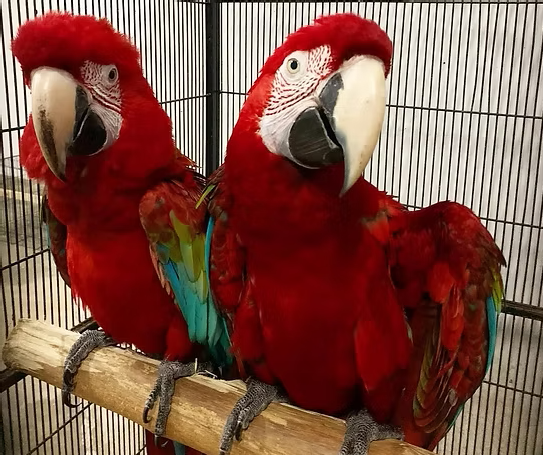

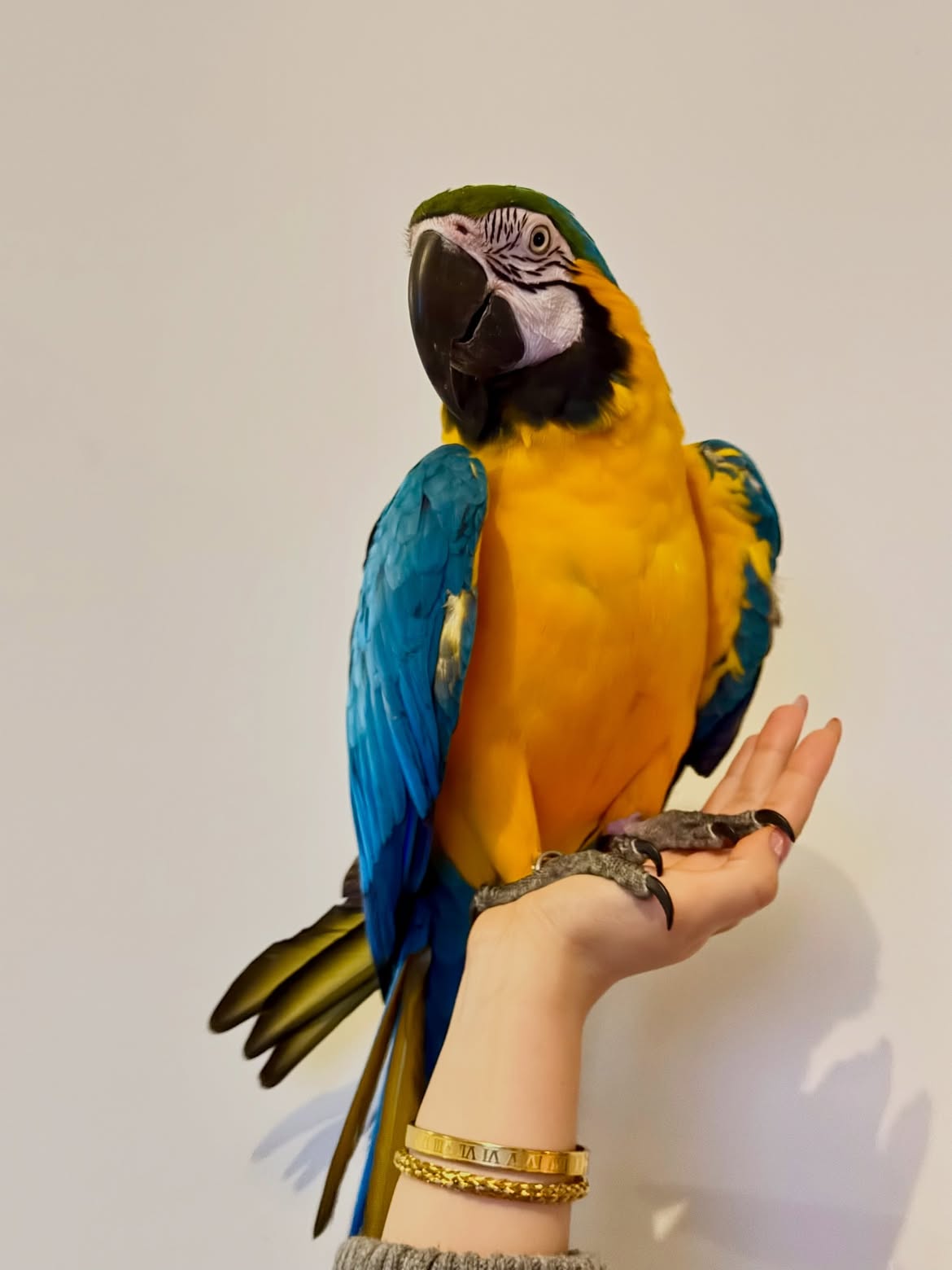
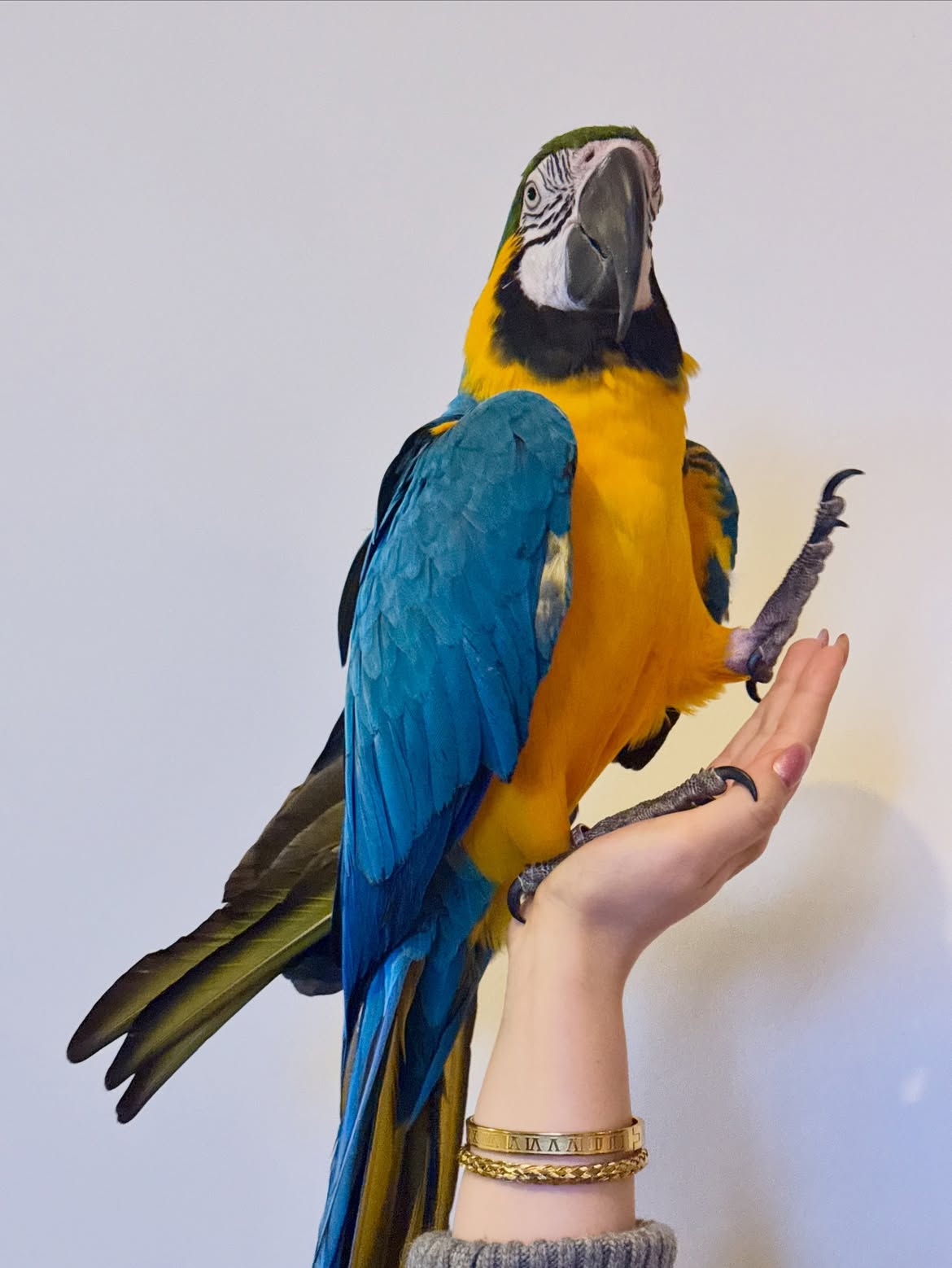
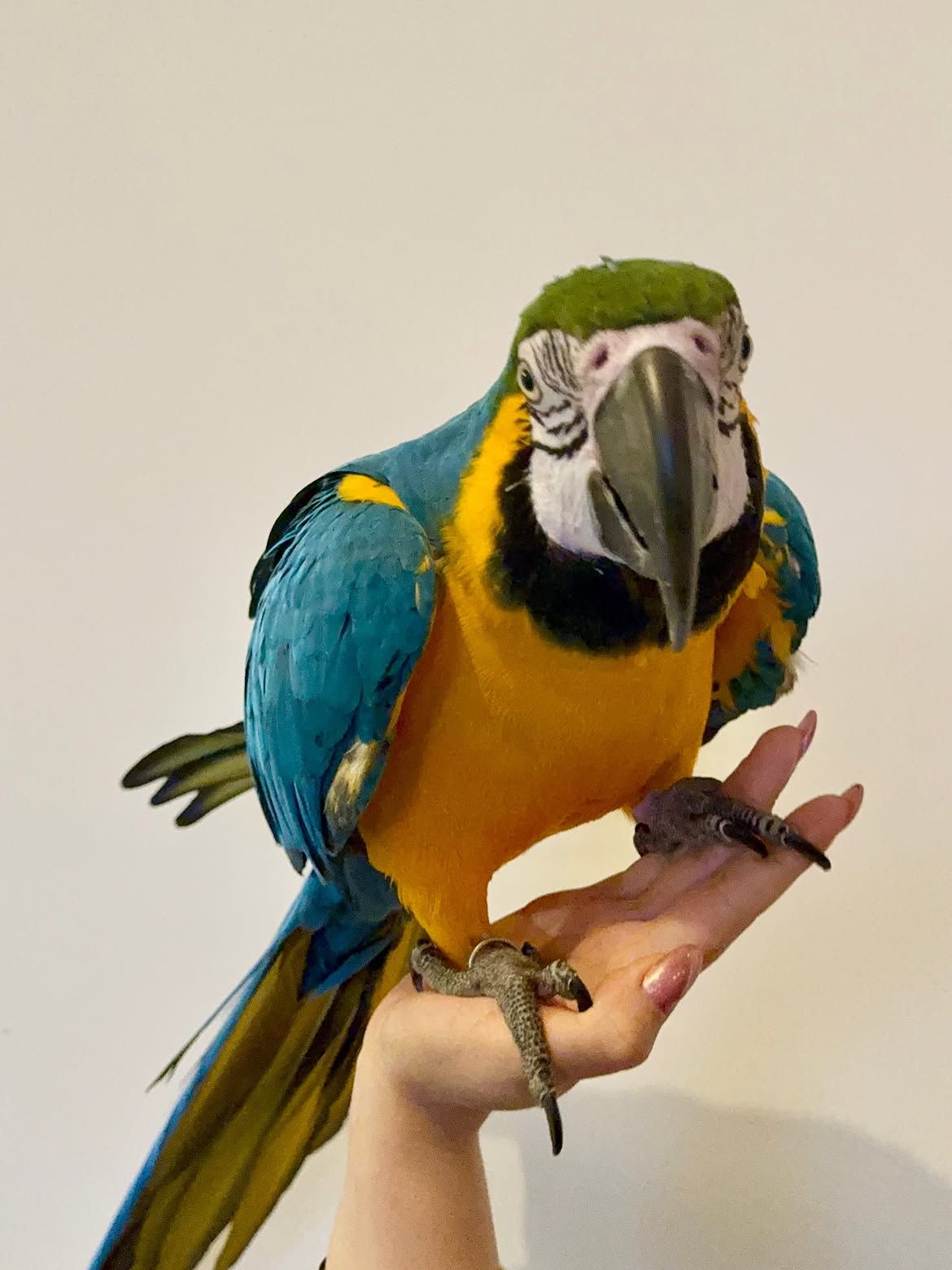
Baby Male Blue and Gold Macaw for Sale | Healthy, Hand-Raised Macaw meet Zeus
$900.00
Blue and Gold Macaw — Male, Available Now
$900
This beautiful Blue and Gold Macaw is ready for his forever home!
- Age: 8 months
- Name: Zeus
- Sex: Male
- Breed: Purebred
- Registration: Registered
- Training: Cage trained
- Guarantees: 1-year health guarantee | 30-day money-back guarantee
Friendly, well-socialized, and ready to bond with his new family. Serious inquiries only add to cart and place your order— contact for more details or to arrange a visit.
Description
Blue and Gold Macaw for Sale | Healthy, Hand-Raised Macaws
Looking for a Blue and Gold Macaw for sale? The Blue and Gold Macaw (Ara ararauna), also commonly called the Blue and Yellow Macaw, is one of the most beautiful, intelligent, and affectionate large parrots available to experienced bird owners.
Known for its brilliant blue-and-yellow plumage, playful personality, impressive intelligence, and ability to develop strong bonds with people, the Blue and Gold Macaw can make a remarkable lifelong companion when given proper care, socialisation, nutrition, exercise, and mental stimulation.
Blue and Gold Macaw Quick Facts
- Common Name: Blue and Gold Macaw
- Also Known As: Blue and Yellow Macaw
- Scientific Name: Ara ararauna
- Origin: Central and South America, including parts of Mexico, Central America, and northern South America
- Adult Length: Approximately 33–35 inches, including the tail
- Weight: Approximately 2–3.5 pounds, depending on the individual
- Lifespan: Commonly 50–60+ years, with some well-cared-for birds living longer
- Temperament: Intelligent, social, playful, affectionate, and curious
- Diet: High-quality formulated parrot food supplemented with appropriate fresh fruits, vegetables, and other nutritious foods
- Best For: Experienced parrot owners who have sufficient time, space, and commitment for a large companion bird
What Makes the Blue and Gold Macaw Special?
The Blue and Gold Macaw is instantly recognizable because of its spectacular combination of bright blue feathers, golden-yellow underparts, a greenish forehead, and a large black beak. Its long tail and impressive wingspan make it one of the most visually striking companion parrots.
Beyond its appearance, this macaw is celebrated for its remarkable intelligence and social nature. A well-socialized Blue and Gold Macaw can become deeply attached to its human family and often enjoys interacting, playing, learning new behaviors, and participating in everyday activities.
These parrots are naturally curious and require more than food and a cage. They thrive when their environment provides opportunities for social interaction, exercise, exploration, play, and mental stimulation.
Personality and Temperament
Blue and Gold Macaws are highly intelligent and often have outgoing, affectionate personalities. With appropriate socialization, they can develop strong relationships with their caregivers.
They may enjoy:
- Interactive play and training
- Learning words, sounds, and behaviors
- Spending supervised time outside their enclosure
- Exploring toys and enrichment activities
- Social interaction with their caregivers
- Positive-reinforcement training
- Foraging and problem-solving games
However, prospective owners should understand that macaws are large, powerful, and vocal parrots. They can produce loud calls and screams, particularly when excited, seeking attention, frightened, bored, or responding to environmental sounds.
For this reason, a Blue and Gold Macaw may not be the right choice for apartments, very small homes, or households where loud vocalizations could become a problem.
Intelligence and Talking Ability
One of the most appealing characteristics of the Blue and Gold Macaw is its intelligence. These parrots can learn to associate sounds and words with situations and may develop an impressive vocabulary when consistently trained.
Some individuals become excellent mimics, while others may be more interested in sounds, games, or interaction than talking. Every bird has its own personality and learning ability, so prospective owners should never purchase a macaw solely because they expect it to speak.
Regular, positive training can help channel a macaw’s intelligence into healthy behaviors while strengthening the relationship between bird and caregiver.
Care Requirements for a Blue and Gold Macaw
Owning a Blue and Gold Macaw is a long-term commitment. These birds need a spacious, secure environment where they can comfortably move, climb, stretch their wings, and play.
Spacious Housing
Because of their large size and long tail, Blue and Gold Macaws need substantially more space than smaller parrots. Their enclosure should be appropriately sized, sturdy, secure, and equipped with safe perches and enrichment items.
They should also receive regular, supervised opportunities for exercise outside their enclosure in a safe environment.
Nutritious Diet
A balanced diet is essential for maintaining a macaw’s overall health. Depending on veterinary guidance, an appropriate diet can include quality formulated parrot food along with suitable fresh fruits and vegetables.
Fresh, clean drinking water should always be available.
Because nutritional requirements can vary between individual birds, owners should work with an avian veterinarian to establish an appropriate feeding routine.
Toys and Mental Stimulation
A bored macaw can develop undesirable behaviors. Providing safe toys, chewable materials, foraging opportunities, training sessions, and regularly rotated enrichment can help keep an intelligent Blue and Gold Macaw mentally engaged.
Macaws naturally use their powerful beaks for exploration and chewing, so owners should expect toys and enrichment materials to require regular replacement.
Socialisation and Attention
Blue and Gold Macaws are highly social birds. They generally benefit from consistent interaction, positive training, and appropriate socialization.
A prospective owner should have enough time each day to provide meaningful interaction rather than treating the bird as a decorative pet.
Is a Blue and Gold Macaw Right for You?
A Blue and Gold Macaw can be an extraordinary companion, but it is not a low-maintenance pet.
This species may be a good fit for someone who:
- Has experience caring for large parrots
- Has adequate space for a large bird
- Can provide daily interaction and enrichment
- Understands that macaws can be loud
- Can provide a nutritious, species-appropriate diet
- Is prepared for a decades-long commitment
- Has access to qualified avian veterinary care
- Understands the responsibility of caring for an intelligent, powerful parrot
If you live in a small apartment or cannot accommodate loud vocalisations, extensive enrichment, and daily interaction, a Blue and Gold Macaw may not be the best choice.
Why Choose a Hand-Raised Blue and Gold Macaw?
When searching for a hand-raised Blue and Gold Macaw for sale, prospective owners should look beyond appearance and price.
A responsibly raised young macaw should receive appropriate socialisation and exposure to normal household experiences in a safe and controlled manner. Early positive human interaction can help support confidence and make future training easier, although every bird develops at its own pace.
Before bringing a macaw home, ask about the bird’s:
- Age and hatch information
- Current diet
- Socialization history
- Veterinary records
- Health history
- Feeding routine
- Weaning status
- Personality and temperament
- Identification or documentation, where applicable
Responsible placement should prioritise the bird’s welfare and the owner’s ability to provide appropriate lifelong care.
Blue and Gold Macaw vs. Blue and Yellow Macaw
If you have searched for Blue and Yellow Macaws for sale, you may actually be looking for a Blue and Gold Macaw.
The names Blue and Gold Macaw and Blue and Yellow Macaw are commonly used to refer to the same species, Ara ararauna. The name varies by region, breeder, organisation, and individual preference.
Interesting Blue and Gold Macaw Facts
Here are several fascinating facts about this remarkable parrot:
- They are highly intelligent. Blue and Gold Macaws can learn behaviours, sounds, and words through consistent training.
- They are extremely social. Strong relationships with people and other birds can be important to their well-being.
- They have powerful beaks. Their beaks are capable of cracking hard foods and can cause serious injury if a bird is frightened or improperly handled.
- They are naturally active. Flying, climbing, chewing, exploring, and foraging are important forms of enrichment.
- They can be very vocal. Their calls can travel considerable distances, making them unsuitable for some living situations.
- They can live for decades. Bringing one home is a long-term commitment that can extend across major stages of an owner’s life.
- They are known for striking pair bonds. In the wild, macaws can form strong long-term relationships with mates.
Frequently Asked Questions About Blue and Gold Macaws
How much does a Blue and Gold Macaw cost?
The price of a Blue and Gold Macaw varies depending on factors such as age, socialisation, breeder practices, veterinary care, location, documentation, and individual characteristics. Buyers should evaluate the bird’s health, history, care, and welfare rather than choosing solely based on the lowest price.
Are Blue and Gold Macaws good pets?
They can be wonderful companion parrots for experienced owners who understand their needs. They are intelligent, affectionate, playful, and highly social, but they also require considerable space, attention, enrichment, and long-term commitment.
Are Blue and Gold Macaws good for beginners?
They are generally better suited to experienced parrot owners. Their size, strength, intelligence, noise level, and complex social and enrichment needs can be challenging for someone who has never cared for a large parrot.
Can Blue and Gold Macaws talk?
Yes. Many Blue and Gold Macaws can learn to imitate human speech and household sounds. However, individual talking ability varies, and no macaw should be purchased with a guarantee that it will develop a particular vocabulary.
How long do Blue and Gold Macaws live?
Blue and Gold Macaws can have exceptionally long lifespans. With appropriate nutrition, veterinary care, safe housing, exercise, and responsible husbandry, some individuals can live for several decades.
Are Blue and Gold Macaws loud?
Yes. They are naturally vocal birds and can produce loud calls and screams. Their vocal nature should be seriously considered before bringing one into a home.
Do Blue and Gold Macaws need a lot of attention?
Yes. These highly social and intelligent parrots need regular interaction, exercise, training, and mental enrichment. Lack of stimulation can contribute to boredom and unwanted behaviours.
Find a Blue and Gold Macaw for Sale
If you are searching for a Blue and Gold Macaw for sale, choosing the right bird is only the beginning. The best match is one whose health, temperament, socialisation, and care requirements fit your household and experience level.
A Blue and Gold Macaw can become a cherished lifelong companion when its physical, emotional, social, and behavioural needs are properly understood and supported.
Before purchasing or adopting any macaw, take time to research the species, verify applicable wildlife and animal-transport regulations, ask for appropriate health documentation, and make sure you are prepared for the responsibility of caring for a large parrot for many years.
Ready to learn more about Blue and Gold Macaws? Explore available birds, ask questions about individual personalities and care histories, and choose a companion that is a suitable match for your lifestyle and experience.