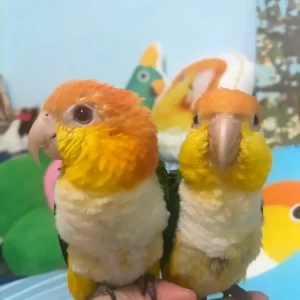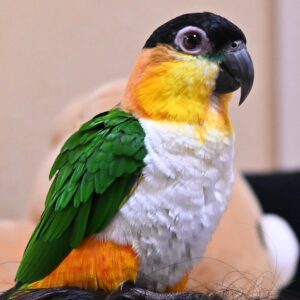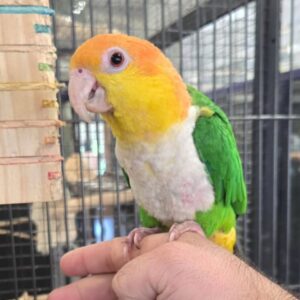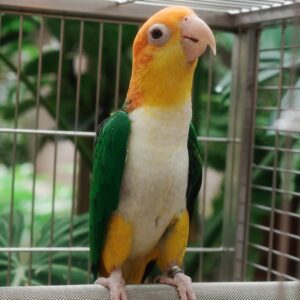
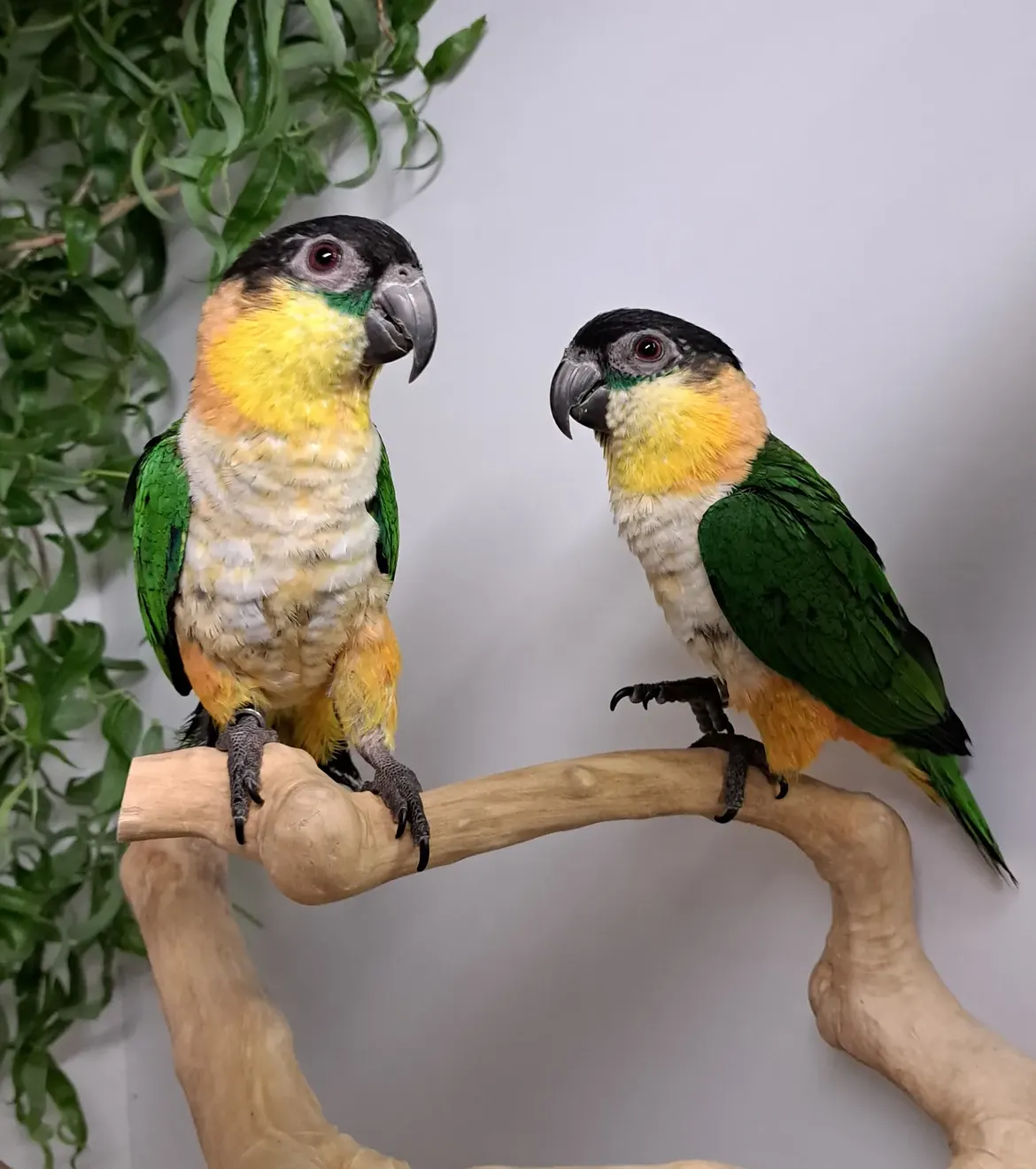
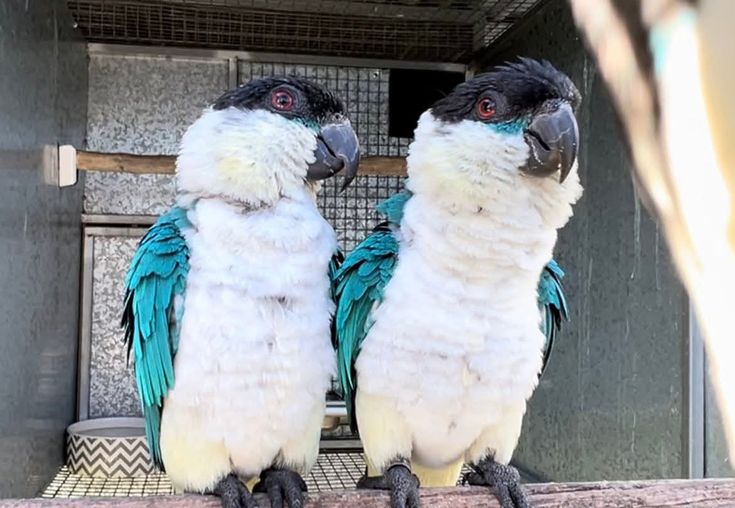
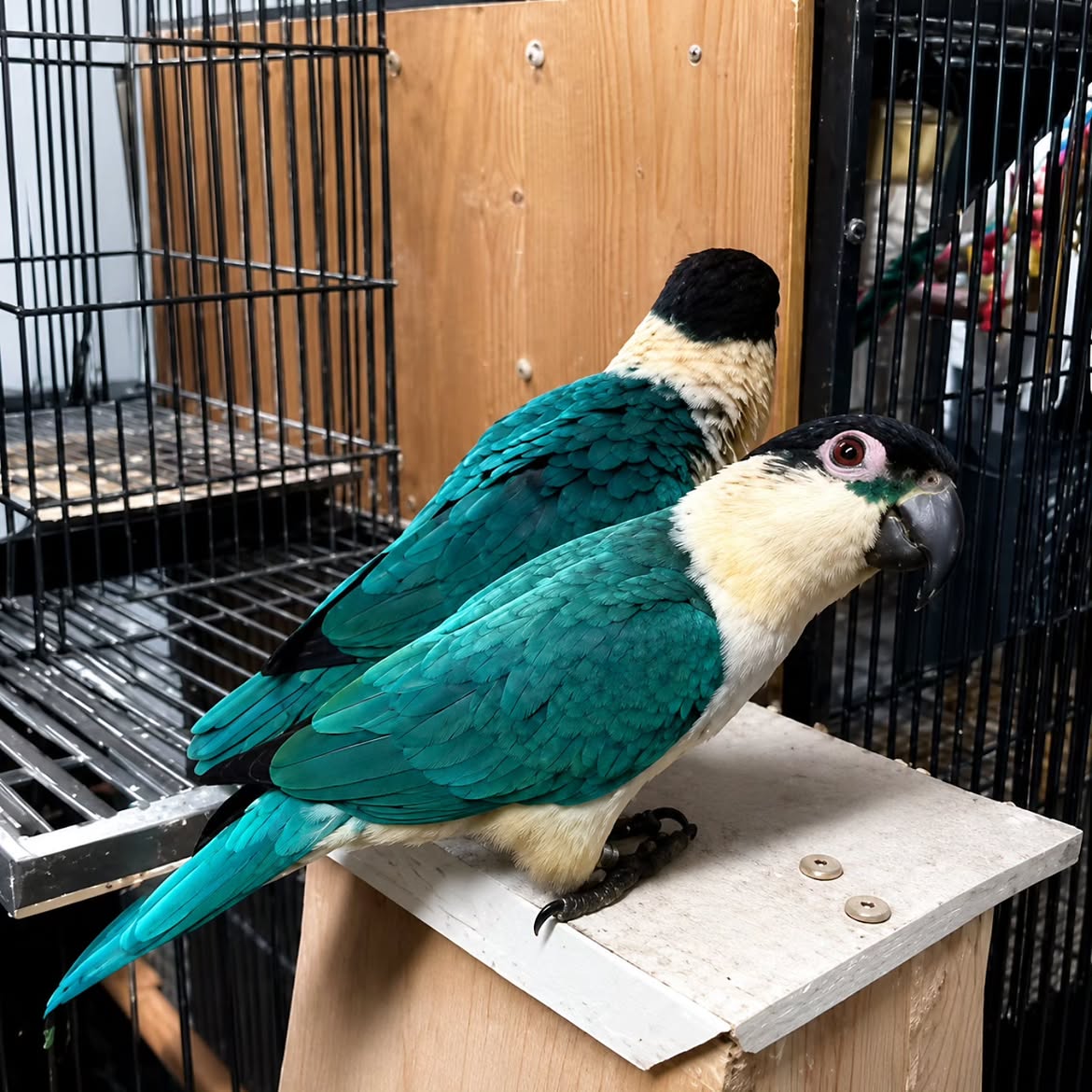
Blue Mutation Black Headed Caique Pair for Sale – Premium Aviary Pair, Meet Kala & Kessy
$1,200.00
Description
Rare Blue Mutation Black Headed Caique Pair for Sale | Premium Aviary Pair, Meet Kala & Kessy,
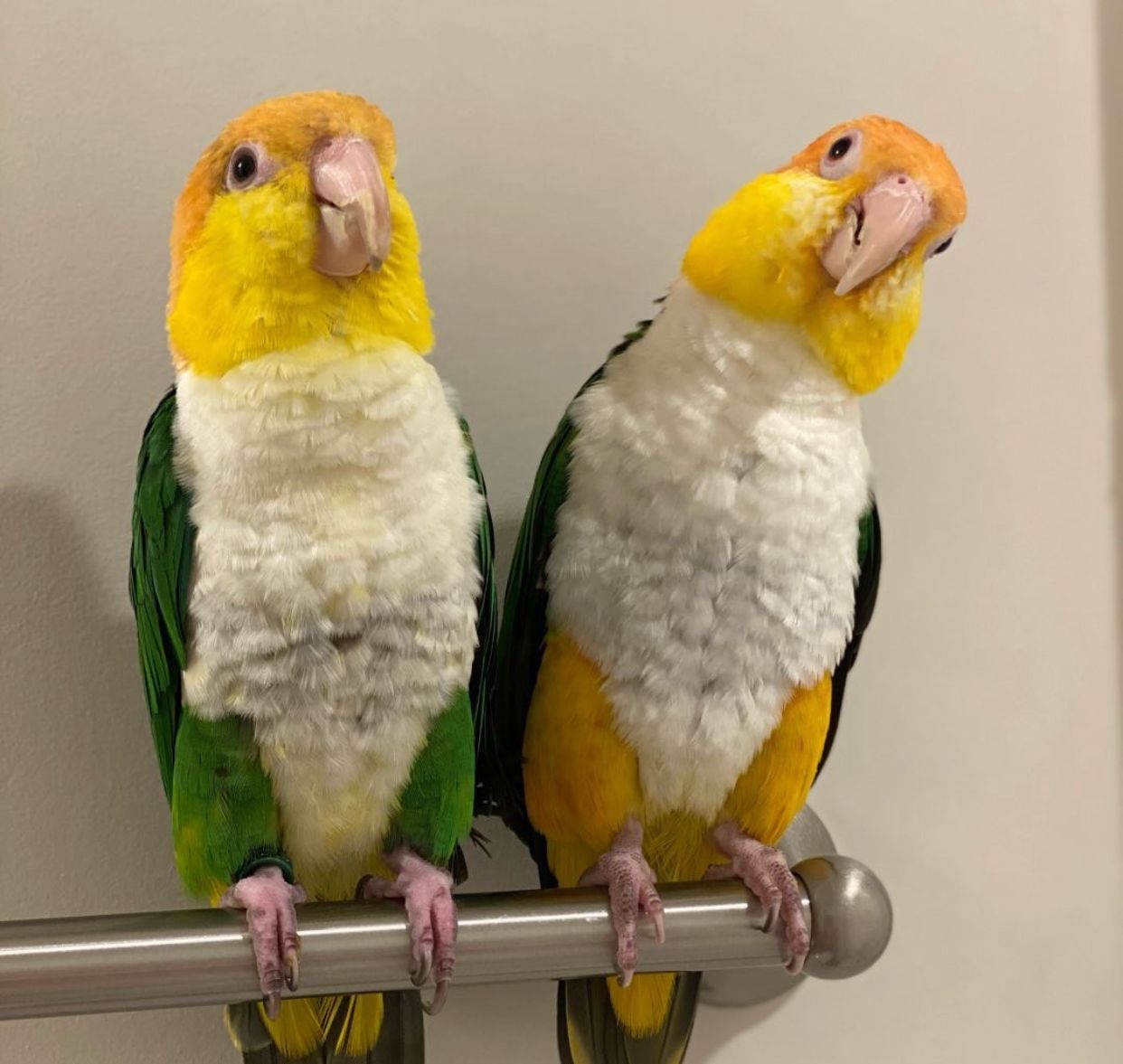
Discover our Caique parrots for sale, including White-Bellied Caiques, Black-Headed Caiques, and Blue-Mutation Black-Headed Caiques. Known for their vibrant colors, playful personalities, and intelligence, Caiques are energetic and social companion birds that enjoy interaction, toys, climbing, and supervised out-of-cage play. Their confident and curious temperament makes them entertaining companions, while their active nature means they require daily attention, enrichment, proper nutrition, and consistent positive handling. Explore our available baby and adult Caique parrots and find a suitable feathered companion for your home.
Caique parrots for sale, Caique parrot for sale online, White-Bellied Caique, Black-Headed Caique, Blue-Mutation Caique, baby Caique parrots, tame Caique parrots, hand-fed Caiques, adult Caique parrots.
The term “caique” is primarily used in aviculture, with ornithologists typically referring to them as the black-headed parrot and white-bellied parrot, the latter of which is sometimes further split into three separate species, green-thighed parrot, yellow-tailed parrot and black-legged parrot. They have historically been called the “seven-colored parrot”. They are relatively small and stocky, with a short, square tail and bright colors; this may be why they are referred to as “caique” based on the term for a similarly described Turkish vessel.[citation needed] They exhibit high social intelligence.
Description
The two species are best distinguished by the black-headed parrot’s black crown; both have white “bellies”. Their typical weight is 150–170 grams, with the white-bellied species being the larger and heavier of the two species. They can live up to 40 years, but this is not common in captivity.
Distribution and habitat
The black-headed caique is found north of the Amazon River, and the white-bellied caique south; there is a large area of overlap between ranges. They can produce fertile hybrids, but this is not common in the wild as it is in captivity. They generally prefer forested areas and subsist on fruit and seeds. Caiques are generally canopy dwellers, spending most of their time in the tops of trees, foraging and playing.