
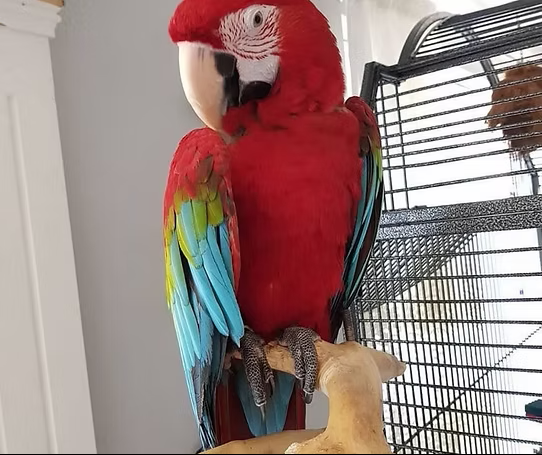

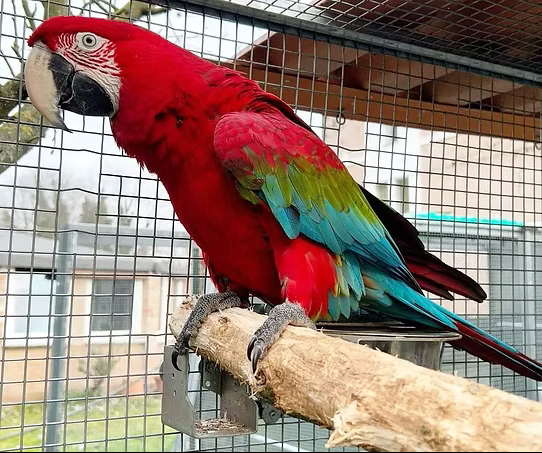
Hand-Raised Red-and-Green Macaw : Meet Red
$1,200.00
Green-Winged Macaws — Female, Available Now
$1200
This beautiful Green-Winged Macaw is ready for his forever home!
- Age: 3 years
- Name: Red
- Sex: Female
- Breed: Purebred
- Registration: Registered
- Training: Potty trained
- Guarantees: 1-year health guarantee | 30-day money-back guarantee
Friendly, well-socialised, and ready to bond with his new family. Serious inquiries only — contact for more details or to arrange a visit.
Description
Green-Winged Macaw for Sale: Your Complete Guide to Buying a Hand-Raised Red-and-Green Macaw
Searching for a Green-Winged Macaw for sale? You’re looking at one of the most magnificent large parrots on Earth. The Green-Winged Macaw (Ara chloropterus) — often called the Red-and-Green Macaw — captivates everyone who sees it. With blazing scarlet plumage, emerald wing patches, sapphire wing tips, and a personality as bold as its colors, this “Gentle Giant” of the macaw world represents the pinnacle of companion parrot ownership.
But here’s the truth most sellers won’t tell you: owning a Green-Winged Macaw isn’t like having a budgie or a cockatiel. These birds are intelligent, emotionally complex, and physically powerful animals that can live for decades. Before you buy a Green-Winged Macaw online or from a breeder, you need to understand exactly what you’re committing to — and whether your lifestyle, home, and experience level can truly support one.
This guide covers everything: what Green-Winged Macaws look like, how they behave, what they eat, how big they get, whether they talk, how much they cost, and what responsible ownership actually looks like. If you’re serious about bringing one of these extraordinary birds home, read on.
What Is a Green-Winged Macaw?
The Green-Winged Macaw is a large Neotropical parrot native to the rainforests of Central and South America. It’s one of the largest macaw species commonly kept as a companion bird, second only to the Hyacinth Macaw in sheer bulk.
Quick Facts at a Glance
Table
| Attribute | Details |
|---|---|
| Common Name | Green-Winged Macaw |
| Alternative Name | Red-and-Green Macaw |
| Scientific Name | Ara chloropterus |
| Size | 35–37 inches (90–95 cm) from head to tail |
| Weight | 2.5–3.5 pounds (1.1–1.6 kg) |
| Wingspan | Up to 48 inches (122 cm) |
| Lifespan | 60–80+ years with proper care |
| Origin | Panama, Colombia, Venezuela, Guyana, Brazil, Bolivia, Paraguay |
| Conservation Status | Least Concern (IUCN), but CITES Appendix I/II regulated |
The Green-Winged Macaw’s most distinctive feature is the broad band of green feathers across the middle of its wings, bordered by blue toward the tips. This separates it visually from the Scarlet Macaw, which displays yellow wing patches instead.
Green-Winged Macaw for Sale: What We Offer
Our hand-raised Green-Winged Macaw parrots are raised with an emphasis on early socialization, positive human interaction, and healthy physical development. We don’t just sell birds — we prepare them for life in a human household.
What You Can Expect
-
Age: Approximately 3 years old* (varies by individual bird)
-
Sex: Unsexed; DNA sexing available upon request
-
Weaning Status: Fully weaned and eating independently*
-
Temperament: Socialized according to individual development; personality varies by bird
-
Health Records: Veterinary documentation provided as applicable
-
Availability: Contact us directly for current birds, pricing, and documentation
*Age and weaning details are updated per individual bird before any listing goes live.
Every bird we place is evaluated individually. We don’t make blanket promises about temperament because no two macaws are identical. What we do promise is transparency about each bird’s history, behavior, and needs.
Why Choose a Green-Winged Macaw? 6 Reasons This Species Stands Out
1. The “Gentle Giant” Reputation
Compared to some other large macaws — like the Scarlet or Blue-and-Gold — Green-Winged Macaws are often described as calmer, more deliberate, and less reactive. They’re not pushovers, but they tend to process situations before reacting, which makes them excellent candidates for experienced owners who value a thinking parrot over an impulsive one.
2. Deep Emotional Bonds
These birds don’t just tolerate human interaction — they crave it. A well-socialized Green-Winged Macaw will seek out your company, participate in household routines, and form profound attachments to their primary caregivers. This isn’t a bird you keep in a back room. It wants to be where you are.
3. Exceptional Intelligence
Green-Winged Macaws are problem-solvers. They figure out latches, navigate complex foraging toys, and learn routines quickly. This intelligence demands engagement — a bored macaw is a destructive macaw — but it also means they’re incredibly rewarding to train and interact with.
4. Stunning Visual Presence
Let’s be honest: part of the appeal is undeniable beauty. The crimson body, emerald mid-wing band, cobalt wing tips, and long scarlet tail create a visual impact no photograph fully captures. These birds are living art.
5. Impressive Vocal Ability
While not every Green-Winged Macaw becomes a chatterbox, many develop vocabularies of 15–30 words or more. They mimic household sounds, learn contextually, and some even use words with apparent understanding. Vocalization varies enormously by individual.
6. A Lifetime Companion
With potential lifespans exceeding 60–80 years, a Green-Winged Macaw isn’t a pet you outlive — it’s a family member you plan your life around. For owners ready for that depth of commitment, there’s nothing else like it.
Green-Winged Macaw vs. Scarlet Macaw: Know the Difference
Buyers often confuse these two red macaws. Here’s how to tell them apart:
Table
| Feature | Green-Winged Macaw (Ara chloropterus) | Scarlet Macaw (Ara macao) |
|---|---|---|
| Wing Color | Green band across mid-wing; blue tips | Yellow band across mid-wing; blue tips |
| Facial Skin | Bare white skin with fine red feather lines | Bare white skin with less feathering |
| Body Build | Stockier, more robust, heavier | Slightly leaner, longer-looking |
| Tail | Long, tapered red tail | Long red tail with blue tip |
| General Temperament | Often calmer, more deliberate | Often more energetic, assertive |
| Size | Slightly larger and heavier | Slightly smaller |
If you’re trying to identify a bird in a photo, look at the wings. Green band = Green-Winged. Yellow band = Scarlet. It’s the fastest field mark there is.
Green-Winged Macaw Temperament: What to Really Expect
Species descriptions only get you so far. Here’s what experienced owners and avian behaviorists consistently report about Green-Winged Macaw personality:
The Positive Side
-
Affectionate and cuddly with trusted humans
-
Playful and curious about new objects, sounds, and experiences
-
Food-motivated, which makes training easier
-
Generally less nippy than more reactive macaw species
-
Capable of gentle interaction when properly socialized
The Reality Check
-
Powerful beak capable of cracking hard nuts — and inflicting serious bites if frightened or overstimulated
-
Emotionally sensitive: they pick up on household tension, neglect, or inconsistency
-
Territorial around their cage: resource guarding is common and manageable with training
-
Loud: expect regular, natural vocalizations including screams, squawks, and contact calls
-
Demanding: they need daily interaction, not weekend attention
Bottom line: A Green-Winged Macaw’s behavior reflects the quality of care, socialization, and training it receives. These are not “set it and forget it” pets.
Are Green-Winged Macaws Good Family Pets?
Yes — for the right family.
A Green-Winged Macaw can integrate beautifully into a household that understands large parrot needs. But this isn’t a starter bird. Consider these factors honestly:
✅ Good Fit If:
-
You have experience with large parrots or are committed to learning from an avian professional
-
Someone is home daily for several hours of interaction
-
You have space for a large macaw cage (minimum recommendations below)
-
Your household noise tolerance is high
-
You have access to an avian veterinarian
-
You’re financially prepared for specialized diets, toys, vet care, and emergency expenses
-
Children in the home are old enough to understand boundaries and are supervised
❌ Poor Fit If:
-
You travel frequently or work long hours away from home
-
You live in a small apartment with thin walls
-
You’re looking for a quiet, low-maintenance pet
-
You have very young children who don’t understand animal boundaries
-
You’re not prepared for a 50+ year commitment
Green-Winged Macaw Care Requirements
Housing: Cage Size & Setup
A Green-Winged Macaw needs an exceptionally large, heavy-duty enclosure. This is non-negotiable.
Minimum Cage Dimensions (bigger is always better):
-
Width: 48–60 inches
-
Depth: 36–48 inches
-
Height: 60–72 inches
Critical Cage Features:
-
Bar spacing: 1 to 1.5 inches (too wide and they can get heads stuck; too narrow and they can’t grip properly)
-
Bar gauge: Heavy-duty steel — macaws bend thin bars
-
Locking mechanisms: Escape-proof latches (they will figure out simple doors)
-
Removable grate and tray: For daily cleaning
-
Stainless steel or powder-coated wrought iron: Safe, durable, non-toxic
Inside the cage, provide:
-
Multiple natural wood perches of varying diameters (manzanita, java wood, rope perches)
-
Stainless steel food and water bowls — secured so they can’t be dumped
-
Foraging toys and puzzle feeders
-
Safe chewing materials: untreated wood blocks, vegetable-tanned leather, palm fronds
-
A bathing dish or access to misting
Out-of-Cage Time
Green-Winged Macaws need supervised out-of-cage time daily — ideally 2–4 hours in a bird-safe area. This isn’t optional enrichment; it’s essential for physical and mental health. A macaw that never leaves its cage develops behavioral problems: feather destruction, screaming, aggression, and depression.
Green-Winged Macaw Diet & Nutrition
A healthy Green-Winged Macaw diet requires variety, balance, and veterinary guidance. Here’s what responsible feeding looks like:
Dietary Foundation
-
High-quality formulated pellets: Should comprise 50–70% of the diet. Choose a brand specifically formulated for large macaws.
-
Fresh vegetables: Dark leafy greens (kale, collards, Swiss chard), carrots, sweet potatoes, squash, bell peppers, broccoli
-
Limited fresh fruits: Berries, papaya, mango, pomegranate, apple (no seeds) — fruits are treats, not staples due to sugar content
-
Healthy grains and legumes: Cooked quinoa, brown rice, lentils, chickpeas
-
Sprouted seeds: Excellent nutrition when properly prepared
-
Nuts in moderation: Walnuts, almonds, Brazil nuts, macadamias — high in fat, so use as training rewards
Foods to Avoid
-
Avocado (toxic to all parrots)
-
Chocolate and caffeine
-
Alcohol
-
High-salt or high-sugar processed foods
-
Fruit seeds (especially apple and cherry pits, which contain cyanide)
-
Raw dry beans
-
Onions and garlic in large amounts
Fresh Water
Change water at least twice daily. Macaws often dunk food in their water, so it fouls quickly.
Transitioning Diet
When you bring a Green-Winged Macaw home, don’t change its diet abruptly. Sudden changes cause stress and refusal to eat. Gradually introduce new foods over 2–3 weeks while monitoring weight and droppings.
Exercise & Mental Enrichment: Non-Negotiable Needs
A Green-Winged Macaw without enrichment is like a Border Collie without a job — it will create its own (destructive) entertainment.
Daily Enrichment Checklist
-
Foraging: Hide food in toys, wrap bowls in paper, use puzzle feeders
-
Chewing: Provide safe wood, cardboard, palm, and leather items — chewing is a biological need, not a luxury
-
Training: 10–15 minutes of positive-reinforcement training daily (step-up, target training, stationing)
-
Climbing: Rope nets, ladders, and varied perches inside and outside the cage
-
Social interaction: Talking, preening, shared activities — they need to feel like part of the flock
-
Novelty: Rotate toys weekly. A toy that’s been in the cage for a month is no longer enriching.
Green-Winged Macaw Training: What Works & What Doesn’t
What Works
-
Positive reinforcement: Clicker training, target sticks, favorite treats
-
Consistency: Same cues, same rewards, same expectations every time
-
Short sessions: 5–15 minutes, 2–3 times daily beats one long session
-
Respect for body language: Learn to read pinning eyes, raised crest feathers, open beak warnings, and tail fanning
-
Step-up training: The foundation of all handling — teach this first and reinforce forever
What Doesn’t Work
-
Punishment: Yelling, hitting, spraying with water, or forcing compliance destroys trust and escalates aggression
-
Inconsistency: If jumping on your shoulder is cute on Tuesday but forbidden on Thursday, your bird is confused and anxious
-
Force: You cannot overpower a macaw. You shouldn’t try.
Common Training Goals
-
Step-up onto hand or perch on cue
-
Return to cage voluntarily
-
Accept nail trims and wing clips calmly
-
Target training (touching a stick for a reward)
-
Basic recall in a safe, enclosed space
-
“Station” on a play stand while you eat or work
Do Green-Winged Macaws Talk?
Yes, many do — but not all, and never on command.
Green-Winged Macaws possess the vocal anatomy to mimic human speech, and many develop vocabularies ranging from a few words to several dozen. They also mimic laughter, phone rings, microwave beeps, and other household sounds.
Speech factors:
-
Individual variation: Some birds are natural mimics; others aren’t interested
-
Social environment: Birds in talkative households tend to talk more
-
Age: Younger birds often learn faster, but adults can learn too
-
Training: Consistent, reward-based repetition helps
Important: Don’t buy a macaw expecting a talking bird. Buy one because you want a complex, intelligent companion — speech is a bonus, not a guarantee.
Green-Winged Macaw Price: How Much Does One Cost?
Green-Winged Macaw prices vary significantly based on:
Table
| Factor | Impact on Price |
|---|---|
| Age | Baby/young birds typically cost more than adults |
| Hand-raising | Hand-fed, socialized birds command premium prices |
| Documentation | Health records, DNA sexing, CITES paperwork add value |
| Lineage | Birds from known breeding lines may be priced higher |
| Location | Prices vary by region due to demand and transport costs |
| Seller reputation | Established breeders with health guarantees charge more |
General price range: $3,000 – $8,000+ USD for a hand-raised, weaned Green-Winged Macaw with documentation.
Additional first-year costs (cage, supplies, vet check, toys, food): $2,000 – $5,000+
Ongoing annual costs: $1,000 – $3,000+ (food, toys, vet care, emergency fund)
Contact us directly for current pricing on available birds. We provide transparent pricing with no hidden fees.
Buying a Green-Winged Macaw Online: Red Flags & Green Lights
The internet is full of macaw listings. Here’s how to separate ethical sellers from scams or irresponsible operations.
🚩 Red Flags — Walk Away If You See These:
-
Prices significantly below market rate (often scams)
-
Seller refuses video calls or in-person visits
-
No health documentation offered
-
Pressure to pay immediately via wire transfer or cryptocurrency
-
Bird is being sold unweaned (feeding formula yourself is dangerous without experience)
-
No information about the bird’s diet, history, or behavior
-
Seller can’t answer basic care questions
-
No written purchase agreement or health guarantee
✅ Green Lights — These Indicate a Responsible Seller:
-
Willingness to answer detailed questions patiently
-
Provides veterinary health records and CITES documentation
-
Offers post-purchase support and guidance
-
Has a clear weaning and socialization protocol
-
Screens buyers to ensure suitability (yes, a good seller will interview you)
-
Provides diet information and transition instructions
-
Has a written contract with health guarantee terms
Questions to Ask Before You Buy:
-
What is the bird’s exact age and hatch date?
-
Is the bird fully weaned? What is it currently eating?
-
Can I see veterinary health records?
-
Has the bird been DNA sexed?
-
What is the bird’s daily routine and socialization history?
-
Can we schedule a video call to see the bird interact?
-
What documentation comes with the purchase?
-
What is your health guarantee policy?
-
Do you provide post-purchase support?
-
What are the shipping/transportation procedures and costs?
-
Is the bird CITES compliant? What permits are required in my area?
-
Can you provide references from previous buyers?
Legal Considerations: CITES & Permits
Green-Winged Macaws are regulated under CITES (Convention on International Trade in Endangered Species). Depending on your country, state, or province, you may need:
-
Import/export permits for interstate or international transport
-
Proof of captive breeding (not wild-caught)
-
State or local exotic animal permits
-
Microchip or band identification records
Never purchase or transport a Green-Winged Macaw without confirming legal requirements for both the seller’s and buyer’s jurisdictions. Requirements differ dramatically between countries and even between U.S. states.
We provide all applicable documentation and guide buyers through permit requirements for their location.
Green-Winged Macaw FAQ
How long do Green-Winged Macaws live?
With excellent care, proper nutrition, regular veterinary check-ups, and mental stimulation, Green-Winged Macaws commonly live 60 to 80+ years. Some individuals have been documented living beyond 90 years. This is a multi-generational commitment.
Are Green-Winged Macaws good for first-time bird owners?
Generally, no. Their size, strength, intelligence, noise level, and long lifespan make them challenging for beginners. We recommend first-time owners start with smaller parrots (conures, cockatiels, or mini macaws) or work extensively with an avian behaviorist before acquiring a Green-Winged Macaw.
How big of a cage does a Green-Winged Macaw need?
Minimum: 48″ W × 36″ D × 60″ H — but bigger is always better. The cage must allow full wing extension without touching the sides. Most owners find that custom-built or premium large macaw cages (60″ × 48″ × 72″ or larger) work best.
Can a Green-Winged Macaw live in an apartment?
It’s challenging. These birds are naturally loud, large, and active. Their contact calls can carry through walls. If you live in an apartment, check lease restrictions, consider your neighbors, and honestly assess whether you can provide adequate space and noise management.
Are they good with children?
They can be, with strict supervision. Children must understand that macaws are not stuffed animals — they have boundaries, body language, and the ability to inflict injury. Never leave a large macaw unsupervised with children. Teach kids to read bird body language and respect the bird’s space.
Do they need a companion bird?
Not necessarily. Green-Winged Macaws bond deeply with human caregivers and can thrive as single birds in interactive households. However, if you’re away for long hours daily, a companion bird (not necessarily another macaw) or extensive enrichment becomes critical to prevent loneliness.
What do Green-Winged Macaws eat?
A varied diet of high-quality pellets, fresh vegetables, limited fruits, sprouted seeds, healthy grains, and nuts. Specific dietary plans should be developed with an avian veterinarian based on the individual bird’s age, health, and activity level.
How much attention do they need daily?
Several hours of direct interaction spread throughout the day, plus out-of-cage time, training, and enrichment. A macaw left alone for 8–10 hours daily with minimal interaction will develop behavioral problems.
How to Choose a Healthy Green-Winged Macaw
When evaluating a bird, look beyond flashy plumage. A healthy Green-Winged Macaw shows these signs:
Physical Health Indicators
-
Bright, clear eyes with no discharge or swelling
-
Clean nares (nostrils) — no bubbling, discharge, or crustiness
-
Smooth, well-preened feathers without bald patches, excessive breakage, or stress bars
-
Alert posture and responsive behavior
-
Clean vent (cloaca) — no fecal matting
-
Healthy weight — keel bone should be palpable but not sharp; bird should feel muscular, not bony or overly padded
-
Strong grip and balanced perching
-
Smooth beak without overgrowth, cracks, or discoloration
-
Active, curious behavior — a lethargic, fluffed bird is a warning sign
Behavioral Health Indicators
-
Eats and drinks regularly
-
Produces normal droppings (formed feces, white urates, clear urine)
-
Engages with environment, toys, and people
-
Shows appropriate fear responses without excessive panic or aggression
-
Vocalizes normally for the species
Always request a pre-purchase veterinary exam by an avian-certified veterinarian. This is standard practice in responsible sales.
What Comes With Your Green-Winged Macaw?
Depending on the individual bird and purchase arrangement, your package may include:
-
✅ Hand-raised Green-Winged Macaw parrot
-
✅ Veterinary health documentation and exam records
-
✅ Current diet information and feeding schedule
-
✅ Basic care and housing guidelines
-
✅ Socialization and training transition notes
-
✅ DNA sexing certificate (if requested)
-
✅ CITES documentation and applicable permits
-
✅ Written purchase agreement with health guarantee terms
-
✅ Post-purchase breeder support and consultation access
-
✅ Travel carrier for transport
Exact inclusions are confirmed before purchase. We never surprise buyers with hidden costs or missing paperwork.
Reserve Your Green-Winged Macaw Today
A Green-Winged Macaw isn’t an impulse purchase — it’s a lifelong partnership. If you’ve read this far, you’re taking the right approach: researching thoroughly, understanding the commitment, and preparing responsibly.
Our hand-raised Green-Winged Macaws are socialised with care, raised with proper nutrition, and placed with buyers who demonstrate readiness for large parrot ownership. We believe in ethical breeding, transparent sales, and ongoing support for every bird we place.
Ready to take the next step?
Contact us today to discuss:
-
Current availability and individual bird profiles
-
Pricing and payment options


