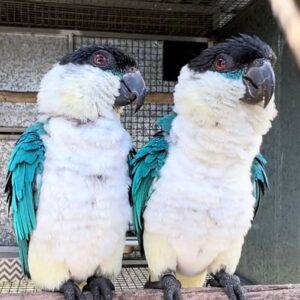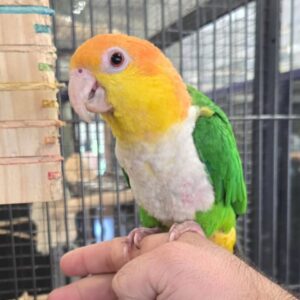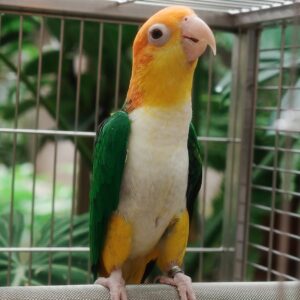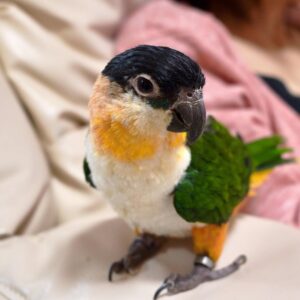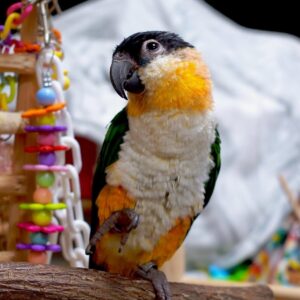
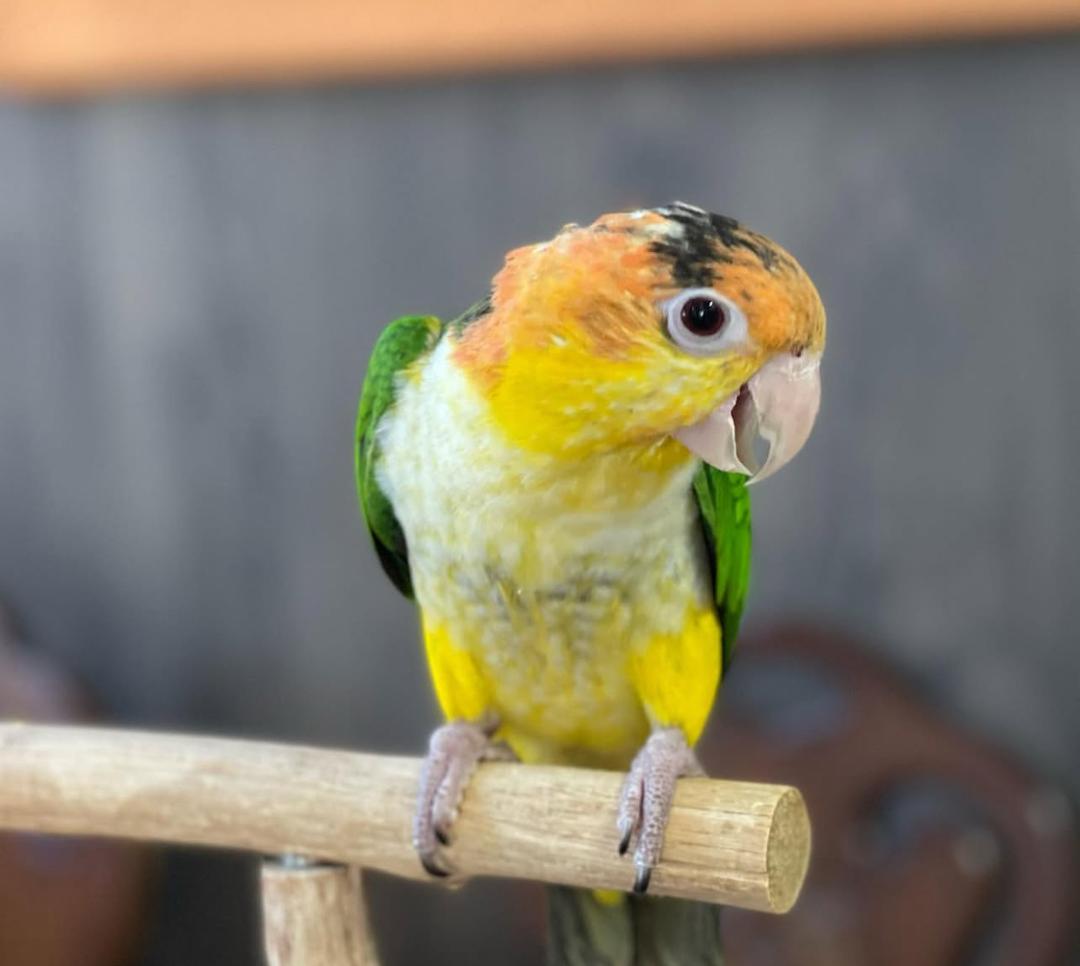
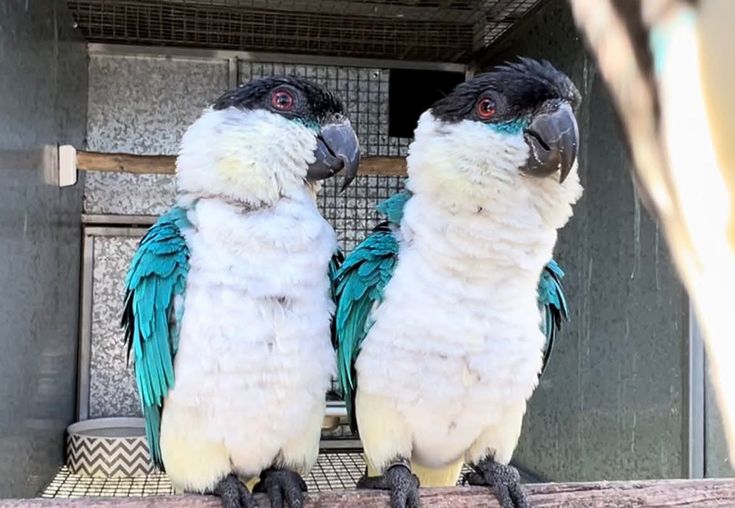
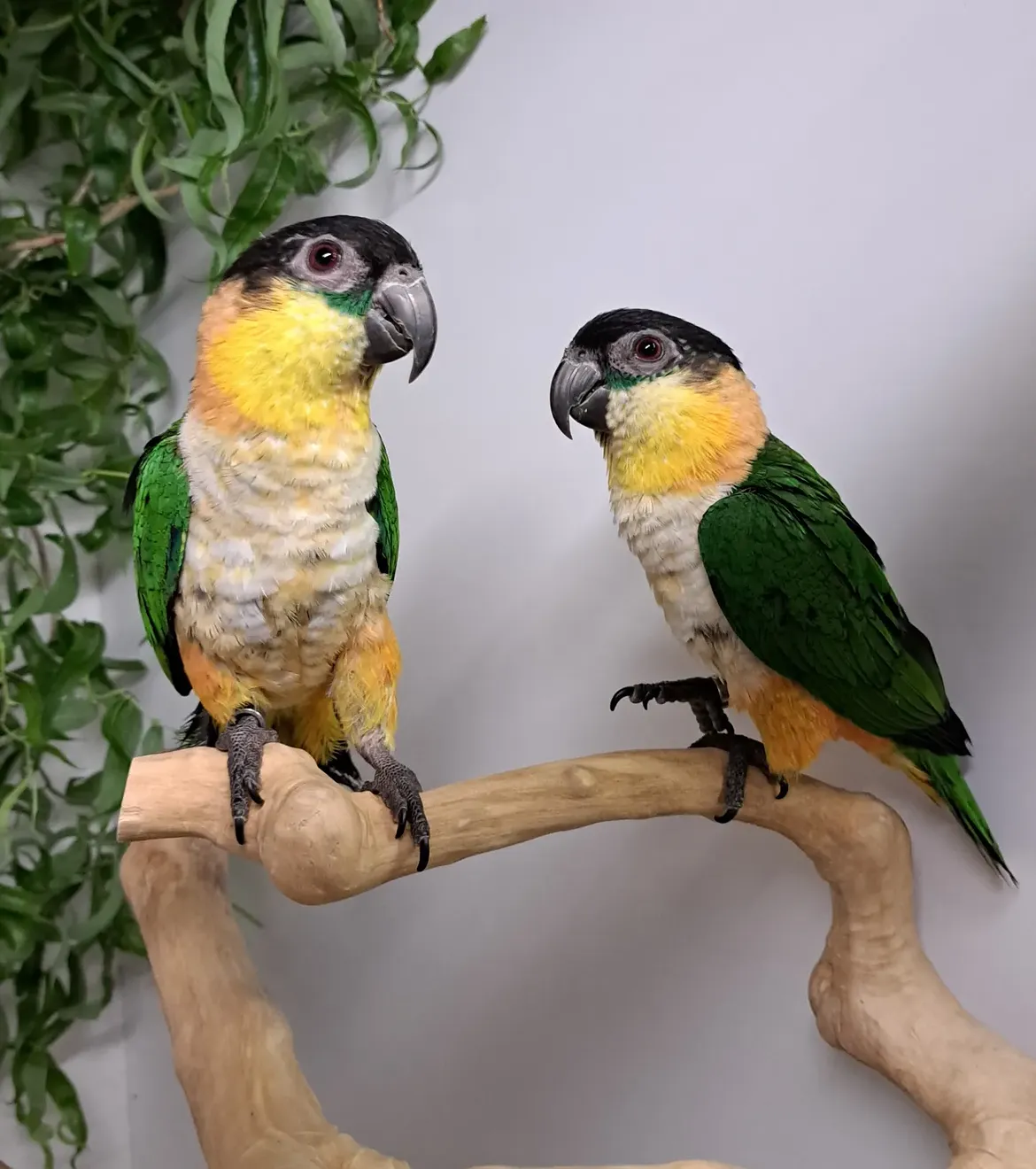
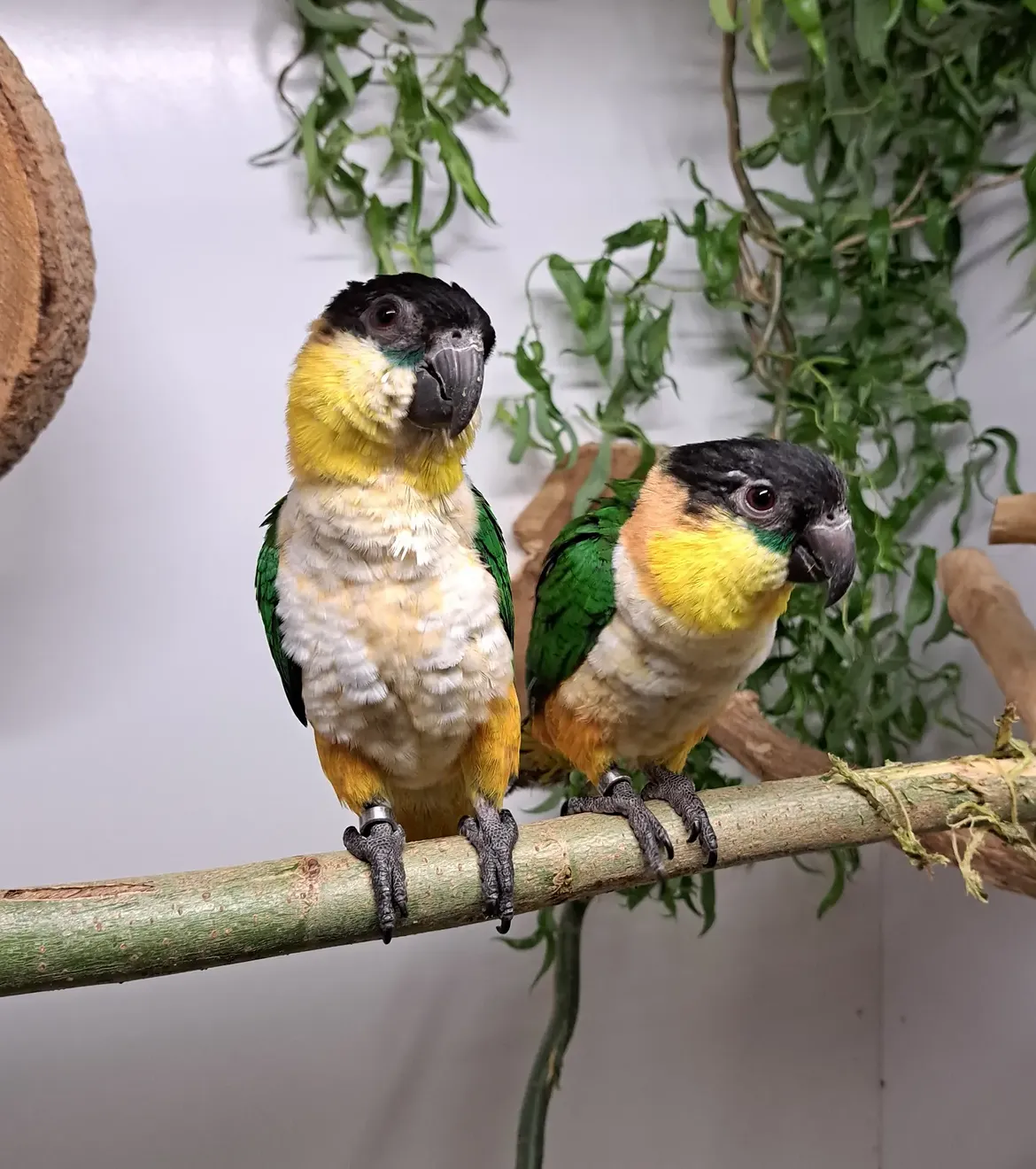
Black Headed Caique Breeding Pair for Sale – Proven Adult Pair – Meet Jojo and Jessy
$1,200.00
Description
Black Headed Caique Breeding Pair for Sale – Proven Adult Pair – Meet Jojo and Jessy
The term “caique” is primarily used in aviculture, with ornithologists typically referring to them as the black-headed parrot and white-bellied parrot, the latter of which is sometimes further split into three separate species, green-thighed parrot, yellow-tailed parrot and black-legged parrot. They have historically been called the “seven-colored parrot”. They are relatively small and stocky, with a short, square tail and bright colors; this may be why they are referred to as “caique” based on the term for a similarly described Turkish vessel.[citation needed] They exhibit high social intelligence.
Description
The two species are best distinguished by the black-headed parrot’s black crown; both have white “bellies”. Their typical weight is 150–170 grams, with the white-bellied species being the larger and heavier of the two species. They can live up to 40 years, but this is not common in captivity.
Distribution and habitat
The black-headed caique is found north of the Amazon River, and the white-bellied caique south; there is a large area of overlap between ranges. They can produce fertile hybrids, but this is not common in the wild as it is in captivity. They generally prefer forested areas and subsist on fruit and seeds. Caiques are generally canopy dwellers, spending most of their time in the tops of trees, foraging and playing.
Taxonomy and systematics
The genus Pionites is classified as two species, the black-headed parrot and white-bellied parrot. Some recent morphological work has suggested that the white-bellied parrot should be split into three species based on plumage and leg coloration,[2] though this has not been accepted by either the IOC World Bird List,[4] or the South American Classification Committee.[5] In the past these parrots were often allied with the conures or other South American parakeets. Recent mitochondrial and nuclear DNA work has found Pionites to be the sister taxon to the Deroptyus (the genus that contains the red-fan parrot); the two genera occupy a basal position in the tribe Arini.[6]